
Maintenance, Repair & Overhaul
The overhaul happens here now.
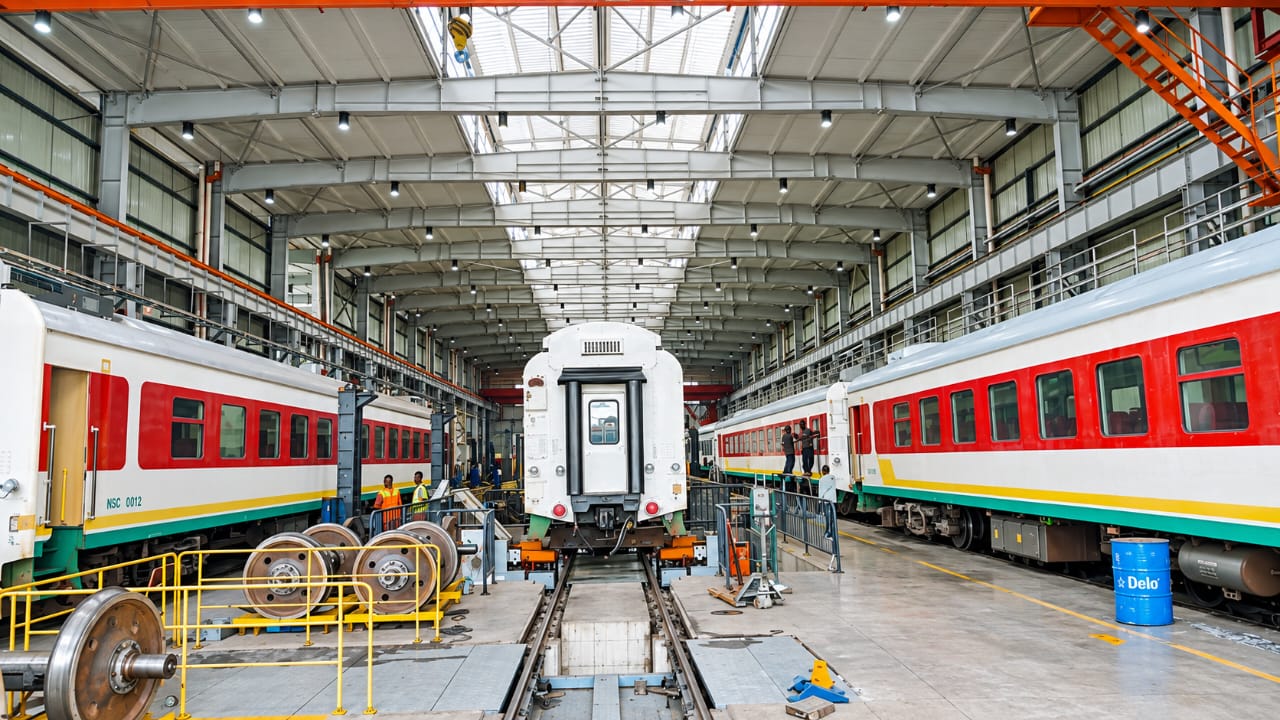
EDR has built complete in-house Maintenance, Repair and Overhaul capability for the Addis Ababa–Djibouti corridor. Locomotives, bogies, wagons and coaches are stripped, rebuilt, tested and returned to service by our own engineers, in our own depots.
- 935
- locomotives in service
- 1.3M4M
- tonnes of annual carrying capacity
- 9%50%
- of Ethiopia’s national exports
- 11%25%
- of national imports
In-country overhaul. Zero foreign shipping. Fleet availability we control ourselves.
EDR’s own figures, covering the two years since the company’s current leadership took office.
Built by our own hands
For most of the history of heavy rail in this region, an overhaul meant a departure. Rolling stock was loaded, shipped overseas, and waited its turn in a foreign workshop. The cost was paid in hard currency. The wait was counted in months. And the knowledge stayed where the work was done.
That era has ended.
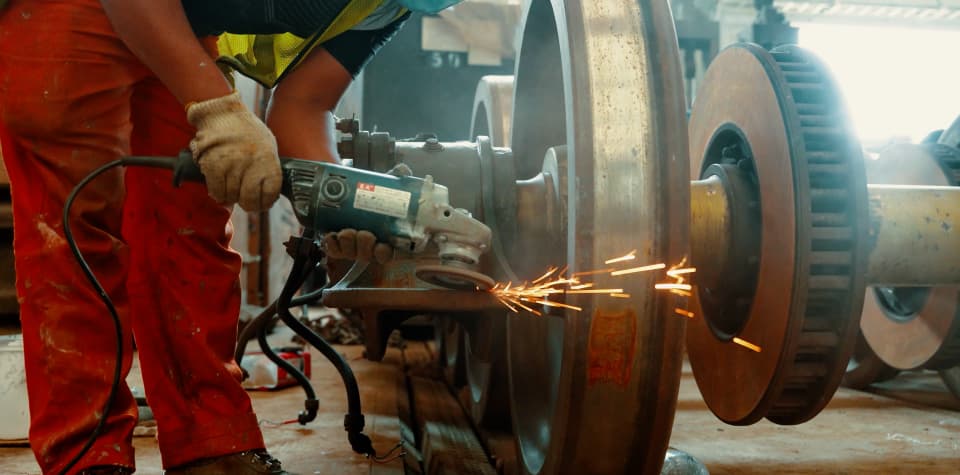
EDR engineers and technicians now overhaul traction equipment and diesel prime movers, rebuild bogies and wheelsets, and fully restore freight wagons and passenger coaches, at our own depots, on our own corridor. Nothing leaves the country. Nothing waits for a berth on a vessel.
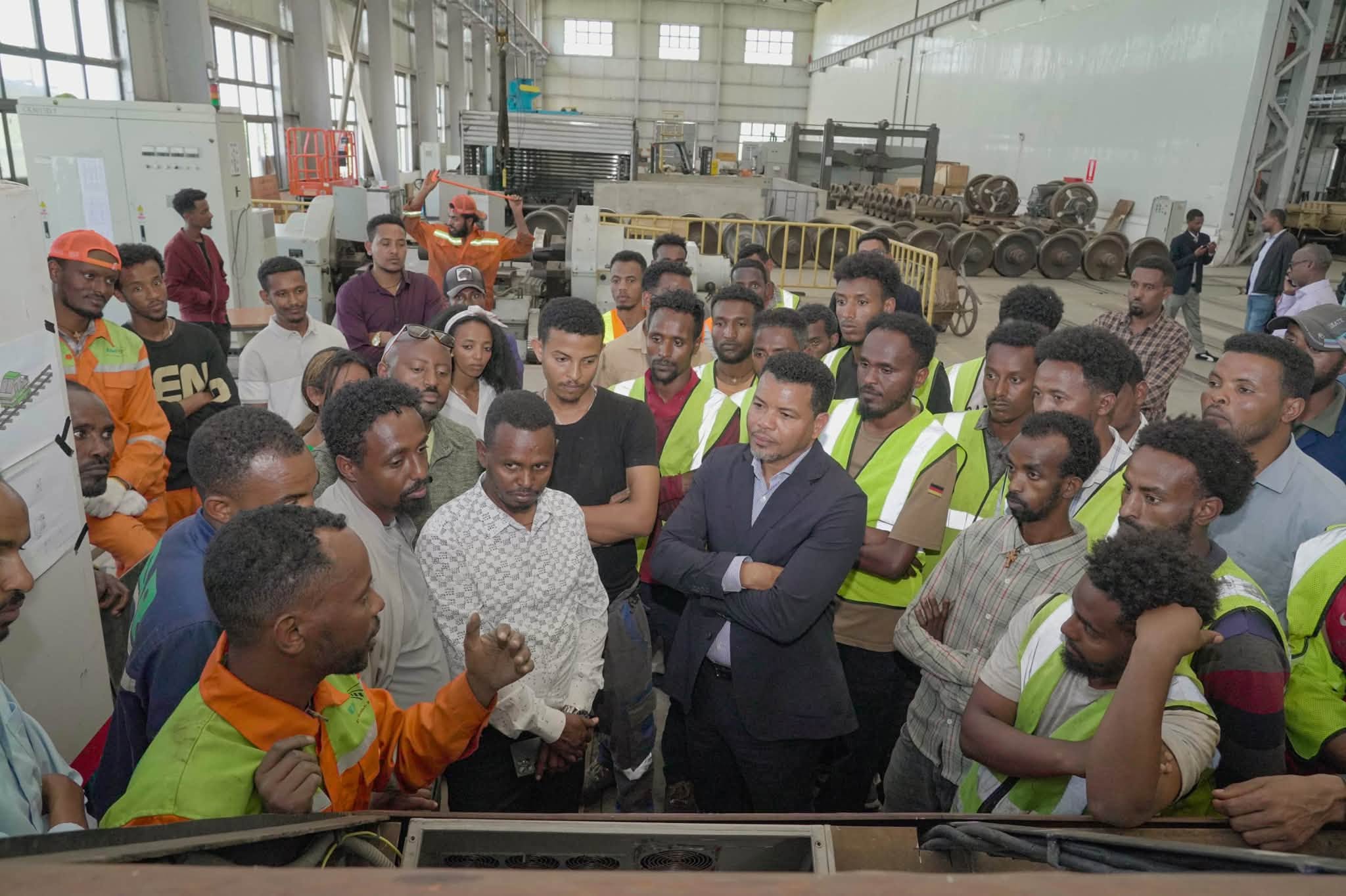
Every piece of maintenance and rolling stock work is now done entirely by our own hands. Not supervised locally. Not partially transferred. Done here, by our own engineers and technicians, to our own standard.
Sovereign capability
The competence to overhaul a traction system or rebuild a bogie now lives inside EDR, held by engineers we employ and train. Capability retained is capability that compounds — every overhaul completed makes the next one faster.
Time returned to service
Removing international shipping, customs and foreign workshop queues from the overhaul cycle takes months out of the turnaround. Rolling stock spends that time earning on the corridor instead of waiting in a port.
Strategic autonomy
Fleet availability is no longer hostage to a foreign schedule, a shipping lane, or a foreign currency allocation. EDR plans its own maintenance calendar and meets it with its own resources.
Core MRO capabilities
Four disciplines, delivered end to end: heavy overhaul, running gear, vehicle restoration, and the preventive work that keeps vehicles out of the workshop in the first place.
Complete heavy overhaul of both fleets: the 25 kV electric locomotives that haul the corridor, and the diesel shunting locomotives that work the terminals.
Electric traction — main-line fleet
- Traction motor strip-down, rewinding, rebalancing and test
- Traction converter and inverter overhaul, power module replacement
- Main transformer inspection, oil analysis and reconditioning
- Pantograph and high-voltage roof equipment rebuild
- Auxiliary converters, battery and charging systems
- Cab electronics, train control interface and on-board signalling equipment
- Insulation resistance and high-potential testing, load-bank commissioning
Diesel shunting fleet
- Full prime mover strip-down and rebuild
- Cylinder head and block reconditioning, liner and piston replacement
- Fuel injection system overhaul and calibration
- Turbocharger and cooling group service
- Transmission and final drive rebuild
Outcome. A locomotive returned to full duty cycle with documented test results, a complete overhaul record, and a reset maintenance clock.
The running gear determines whether a train rides safely and whether the track survives it. This is our most precision-dependent discipline.
Inspection and structural work
- Complete bogie strip-down, cleaning and dimensional inspection
- Frame crack detection by magnetic particle, ultrasonic and dye penetrant testing
- Structural frame repair and certified welding
- Axle ultrasonic testing
- Back-to-back gauging and final geometry certification
Wheels, bearings and suspension
- Wheelset re-profiling to the corridor's specified wheel profile
- Wheel press fitting and removal
- Roller bearing inspection, replacement and pre-load setting
- Primary and secondary suspension rebuild: springs, dampers, air suspension, levelling valves
- Traction gear unit overhaul and backlash setting
- Brake disc, pad and rigging replacement
Outcome. A bogie released to service against a signed dimensional and NDT record, with wheel profiles managed as a fleet-wide programme rather than a reaction to wear.
Full restoration of the vehicles our customers sit in and load. Structural, mechanical and cosmetic work carried out as one programme.
Passenger coaches
- Interior refurbishment: seating, wall and ceiling panels, flooring, lighting
- HVAC overhaul, refrigerant handling and airflow balancing
- Door system rebuild, including obstacle detection and interlocks
- Sanitary and controlled-emission toilet systems
- Glazing replacement and window seal renewal
- Passenger information and low-voltage systems
Freight wagons
- Bodyshell and underframe structural repair
- Deck and floor replacement, container twist-lock renewal
- Draft gear, coupler and buffer overhaul
- Hand brake and securing equipment
Across both
- Corrosion treatment and certified structural welding
- Air brake overhaul: distributor valves, cylinders, reservoirs, pipework, leak testing
- Full blast, prime and repaint to EDR livery specification
Outcome. A vehicle returned to service in as-new condition, with brake performance and structural integrity certified rather than assumed.
The work that keeps vehicles out of heavy overhaul in the first place. This is where a modern railway earns its availability figures.
Scheduled and condition-based
- Examination ladder from daily checks through to major periodic overhaul
- Condition-based monitoring using on-board telemetry
- Wayside detection: hot axle box, wheel impact load, pantograph and catenary interaction
- Oil, lubricant and coolant analysis with trend tracking
- Vibration analysis and thermographic inspection
Assurance and reporting
- Defect capture, reliability trending and root-cause investigation
- Safety compliance auditing
- Maintenance record management and component traceability
- Fleet availability and reliability reporting to the operations directorate
Outcome. Failures identified as trends and corrected on plan, instead of discovered as incidents and corrected under pressure.
Beyond maintenance: we build track, too
EDR’s engineering capability did not stop at restoring what we already owned. The same teams who brought locomotives and wagons back into service are now laying new track — extending the network’s capacity with our own crews, our own methods, and our own timeline.
Rail-anchored sleeper laying
Rail-anchored sleeper laying has become a central technique in our infrastructure programme. Rather than positioning sleepers independently and then threading rail onto them, the rail itself is used to carry, align and set each sleeper in sequence. The method reduces handling, holds gauge and spacing more consistently as work advances, and lets a crew progress further in a working shift than conventional placement allows.
We are now applying it to the Galan Multipurpose Port and Sabata Container Yard expansion, where it is compressing the construction timeline on a project that directly increases the corridor’s freight handling capacity. What matters here is not only the speed. It is that the technique is being planned, supervised and executed in-house, on a live commercial project, by EDR engineers.
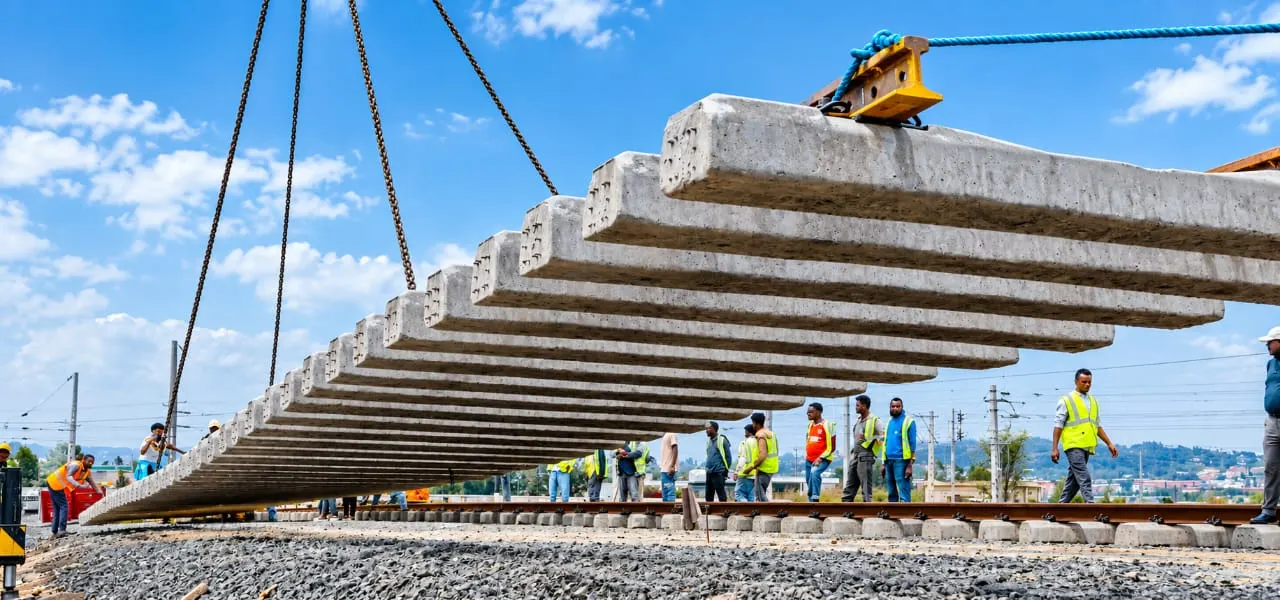
Sleepers coming off the crane onto the rail that will carry and set them. 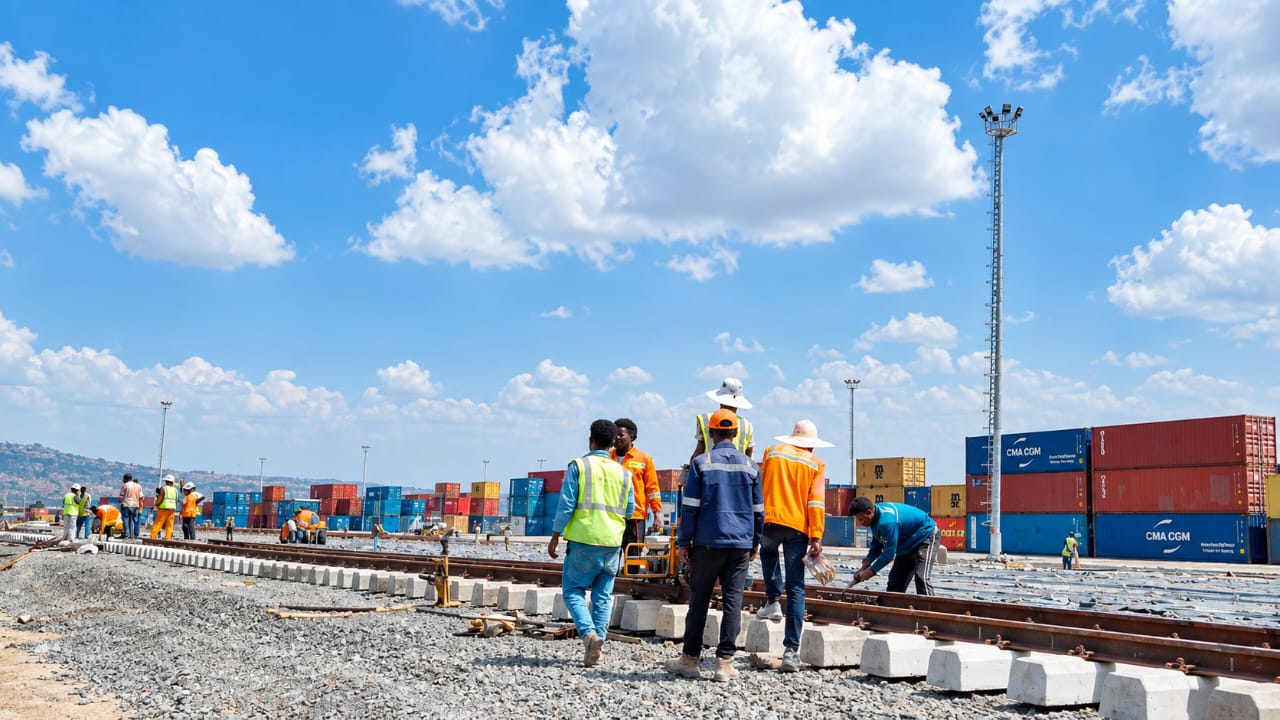
New track going in across a working container yard, on a live commercial site.
One engineering organization, two mandates
Maintenance and construction draw on the same people, the same standards and the same discipline. An engineer who has stripped and rebuilt a bogie understands what track geometry does to running gear. A crew that lays sleepers to a controlled tolerance is building the conditions that keep wheelsets and rail wearing evenly for years afterwards.
Holding both capabilities inside EDR means the corridor is maintained and extended by an organization that answers the whole asset — not by contractors handing work between them.
Depots built for heavy work
EDR’s maintenance infrastructure was designed for a 759 km electrified corridor carrying both passenger and freight traffic, with facilities positioned along the line so that vehicles reach a workshop without leaving the network.
Facility capability
- 01Heavy lifting roads with synchronised jacks for full body lift
- 02Overhead travelling cranes rated for bogie and traction equipment handling
- 03Bogie drop table and dedicated strip-down bays
- 04Underfloor wheel lathe for re-profiling without wheelset removal
- 05Wheel press and axle assembly facility
- 06Component workshops: traction motor rewind, brake, HVAC, electrical, pneumatic
- 07Non-destructive testing bay with certified NDT personnel
- 08Blast, prime and paint booths with extraction and environmental controls
- 09Calibrated tooling and torque management under scheduled recalibration
- 10Commissioning and test road for post-overhaul running and load testing
- 11Controlled parts store with traceable component history
Traceability
Every safety-critical component carries a recorded history: what was fitted, when, by whom, and against which test result.
Certified welding
Structural welding on bogie frames, underframes and bodyshells carried out to railway welding standard by qualified welders under qualified supervision.
Qualified inspection
Non-destructive testing performed and signed off by personnel certified to recognised international standard.
Maintenance governance
Maintenance managed under a documented system covering planning, execution, competence and continuous improvement.
The capability is built. Now we put it to work.
EDR’s MRO division was created to keep our own corridor running. It is now capable of more than that — and we are open to conversations with operators who need heavy maintenance capacity in the region, and with manufacturers and technology partners looking for a long-term engineering base in the Horn of Africa.
Operators and fleet owners
Heavy overhaul, component exchange and scheduled maintenance capacity.
Contact the MRO divisionIndustrial and technology partners
Tooling, components, diagnostics, technology transfer and joint training programmes.
Partnership enquiriesA formal proposal
Submit a signed letter through EDR’s external portal and track it by reference number.
Send a letter to EDR
Built by our own hands. Backed by our own standards. Open for partnership.